Wednesday, March 10, 2010

ECOSYSTEM EVOLUTION

Before Human Transformation (Map)
When Chicago's first human inhabitants arrived at the end of the last ice age, they encountered a landscape much different from what the Europeans observed 11,000 years later. Mastodons and woolly mammoths inhabited an evergreen spruce forest similar to what can be found in Alaska today. Over the succeeding millennia, the climate warmed, the spruce forest gave way to deciduous forest and then to prairie, and the large Pleistocene mammals went extinct.

Climate, never constant, drove these changes. Cyclic variations in the Earth's orbit around the Sun, affecting the amount of solar radiation reaching the Earth, are a primary driver of climate change and of the glacial-interglacial cycle. Because of the constantly changing climate, ecosystems are in continual flux, as plants, animals, and other organisms must continually adjust their ranges to regions of suitable climate.

Geologists refer to the last 1.8 million years as the Quaternary period, a time when great continental glaciers advanced and then retreated 20 or more times. Rather arbitrarily, the Quaternary period is divided into the Pleistocene and Holocene epochs. The old idea was that the Pleistocene was the time of the ice ages, and the Holocene was the “postglacial” period; actually, the Holocene is but one of many interglacial periods that have characterized the Quaternary. The Holocene began approximately 11,500 years ago, when the last continental glaciers very rapidly began to melt away. The glaciers left behind characteristic deposits from which geologists can interpret the glacial history. Glacial ice is always flowing forward and always melting backward. The flowing ice continually transports rocks, pebbles, sand, and other material forward. Whenever a glacier stabilizes for a time at the same position, the transported material accumulates into hilly moraines, several of which occur in the Chicago region.

The starting point for the development of ecosystems in the Chicago region is the retreat of the glaciers at the end of the last ice age, the Wisconsin glaciation. During the maximum of the Wisconsin glaciation, the Lake Michigan lobe of the great Laurentide ice sheet, which covered much of Canada and the northern United States, advanced over the entire Chicago region. The ice sheet entered northeastern Illinois about 30,000 years ago during the Marengo Phase of the Wisconsin glaciation, and it reached its southernmost extent near Shelbyville in central Illinois about 24,000 years ago. At this time, glacial ice covered the entire Chicago region. The outer edge of the ice sheet advanced and retreated several times before finally disappearing from Illinois. By about 18,000 years ago, the active ice sheet retreated into the Lake Michigan basin, although stagnant, melting ice remained behind. The ice then rapidly readvanced to the prominent Valparaiso moraine in the western Chicago region. After retreating from the Valparaiso moraine, the ice margin made a series of minor advances and retreats, building the Lake Border moraines just north of Chicago about 17,000 years ago, after which the Wisconsin glacier finally retreated from Illinois. Thus, time zero for development of post-Pleistocene ecosystems in the Chicago region is about 17,000 years ago.

History of Lake Michigan

Much of the city of Chicago lies on beach and lake sediments deposited by Lake Michigan and its predecessor glacial Lake Chicago. After the Wisconsin glacier retreated from the Chicago region, it still occupied and dammed the northern end of the Lake Michigan basin, forming glacial Lake Chicago. This lake, which covered most of present-day Chicago, was higher than modern Lake Michigan. Its outlet was westward across the Valparaiso moraine via the modern Des Plaines and Illinois River valleys. The Chicago outlet consisted of the southern Calumet Sag Channel and the northern Des Plaines channel, now occupied by the Des Plaines River and the Chicago Sanitary and Ship Canal. As the glacier repeatedly advanced and retreated in the Lake Michigan basin north of Chicago, the level of glacial Lake Chicago fluctuated as different outlets to the east were opened and closed. The Glenwood and Calumet beaches were formed during this time. When glacial ice finally melted completely from the basin about 12,000 years ago, the lake fell because the heavy weight of the ice had depressed the land surface in the northern part of the basin, producing a northern outlet lower than today's. This outlet was located in northeastern Lake Huron, where water drained through Lake Nipissing and into the Ottawa River. The land depressed by the glacial ice gradually uplifted, a process called isostatic rebound. As the northern outlet isostatically rose, the level of the confluent Lakes Michigan and Huron rose to a level higher than today, until the lake eventually spilled out southern outlets at Chicago and southern Lake Huron. This high lake level, called the Nipissing stage, was reached about 5,500 years ago and lasted about 1,000 years. The Toleston beach formed during this time. The outlet at the southern end of Lake Huron eroded downward more rapidly than the outlet at Chicago, so that by about 4,500 years ago, the Chicago outlet was no longer active. Lake and beach sediments from the Nipissing high stage cover much of the city of Chicago, and terrestrial ecosystems developed on these sediments after the Nipissing stage.

Ecosystem Development

Following the retreat of the glaciers, vegetation invaded the newly ice-free terrain. From about 18,000 to 16,000 years ago, open tundra-like vegetation with scattered spruce (Picea) trees covered the landscape. Both white spruce (Picea glauca) and black spruce (Picea mariana) were present, as was larch (Larix laricina). These trees are all common today in the boreal forest or taiga of Canada. Although the glaciers had retreated, the climate was still quite cold. About 16,000 years ago, the spruce forest became denser, and closed forest developed. This spruce forest lasted for about 1,000 years, until about 15,000 years ago, when climate warmed and deciduous trees became more abundant, including balsam poplar (Populus balsamifera), black ash (Fraxinus nigra), and ironwood (Ostrya virginiana or Carpinus caroliniana). Balsam fir (Abies balsamea) also was present, as was spruce, although not as abundantly as before.

This late-Pleistocene forest of spruce and deciduous trees is unusual in that a forest of similar composition does not occur anywhere today. The implication is that the climate was unlike any climate in North America today. The presence of spruce suggests cool summers, whereas the deciduous trees imply relatively warm winters. Thus, the climate may have been more equable than it is now. Although the Laurentide ice sheet, which still existed to the north, may have kept the summers cool, it may also have blocked arctic air masses from extending into the Midwest during winter.

About 13,000 years ago climate apparently cooled again, and spruce became more abundant and black ash less common. During this time birch (Betula) and alder (Alnus) were also important components of the vegetation. Then from about 12,000 to 11,500 years ago, the vegetation changed very rapidly as climate suddenly warmed at the transition from the Pleistocene to the Holocene.

In the earliest Holocene, the conifers— spruce, fir, and larch—disappeared, and a deciduous forest dominated by black ash, elm (Ulmus), and oak prevailed. Other deciduous trees also occurred, including sugar maple, basswood, ironwood, hickory, and walnut ( Juglans). The abundance of elm and ash, trees that favor wet soils, implies a very wet climate. After about 10,000 years ago, the climate became drier, and some limited areas of prairie developed in the Chicago region. This dry period may have lasted about 1,000 years, but conditions apparently became wetter again, because elm increased after about 9,000 years ago. About 6,000 years ago, the climate again became drier, and the modern mosaic of prairie and woodland began to develop. Elm and other fire-sensitive trees decreased in abundance, and oak became the predominate tree on the landscape. The driest time of the Holocene was from about 6,000 years ago to about 3,000 years ago, after which the climate again became somewhat cooler and wetter, although not as wet as in the early Holocene. However, prairie persisted because of its great propensity for burning and because the Native Americans provided a constant source of ignition. Some evidence of cooler climate is evident in the wetlands of the Chicago region. Larch reappeared in the region within the last 1,000 years, for example, at Volo Bog.

Vegetation

At the time when the first Europeans entered the Chicago region, the predominant vegetation was a mosaic of prairie, oak woodland, and savanna, with distinctive vegetation on sand dunes adjacent to Lake Michigan. Soils, topography, and firebreaks strongly controlled the vegetation pattern. Before European settlement, fire was a major influence. Every year the copious prairie vegetation dried in late summer, becoming highly flammable, and fires, mostly set by Native Americans either accidentally or purposefully, occurred annually. These fires carried easily through the prairie and burned into adjacent woodlands. As a result, the woodland vegetation was dominated by fire-resistant trees and occurred in areas protected from fire by rougher topography or water bodies—rivers and lakes.

Native Americans had many reasons to burn the prairie vegetation, including making the prairie easier to walk through, removing cover that might hide enemies, lighting backfires to remove the immediate danger of wildfires, and especially for hunting. “Tall-grass” prairie occurred in Illinois and in the Chicago region. The dominant grasses were big bluestem (Andropogon gerardii ), Indian grass (Sorghastrum nutans), and prairie dropseed (Sporobolus heterolepis), with large forbs such as prairie dock (Silphium terebinthinaceum) and rattlesnake master (Eryngium yuccifolium). Wet prairie with grasses such as prairie cordgrass (Spartina pectinata) occurred in more poorly drained areas.

On the loamy glacial moraines that cover most of the Chicago region, bur oak (Quercus macrocarpa) was the most common tree in woodlands, with lesser amounts of white oak (Quercus alba) and black oak (Quercus velutina). Bur oak has thick bark that makes it resistant to fire, and it resprouts if burned. Groves of bur oak occurred in more protected areas throughout the Chicago region. The early land surveyors described much of this vegetation as “scattered” or “scattering” timber or as “oak openings.” The trees tended to be scrubby. In some places they might have been widely spaced with a grassy understory, but they often occurred in clumps with shrubby undergrowth of oaks and hazel (Corylus americana).

The vegetation pattern clearly shows the effects of fires emanating predominantly from the west. Strips of woodland were wider on the east sides of lakes and rivers. Broad bands of woodland occurred east of the Fox River from Aurora to the Wisconsin border and east of the Des Plaines River in Lake County. Much of the area in Lake County on rolling moraines and east of the larger lakes was forested. In areas more protected from fire, especially immediately east of the larger rivers, forests of oak and hickory (Carya) predominated. In the areas best protected from fires, trees quite sensitive to fire such as sugar maple (Acer saccharum) and basswood (Tilia americana) occurred. Particularly notable was the “Big Woods” east of the Fox River where the city of Aurora is now located. Early pioneers used this term for forests of large trees with a continuous canopy, in contrast to the scrubby, open, frequently burned woodlands that were more common in the region. Depending on exposure to fire, a continuum existed from bur oak savanna or scrub to oak-hickory forest to maple-basswood forest.

The plain of glacial Lake Chicago on which much of the city lies was prairie, but paralleling Lake Michigan were sand dunes with black oak scrub having an understory of hazel, blueberry (Vaccinium), and other shrubs. Cottonwood (Populus deltoides) and jack pine (Pinus banksiana) also occurred on the dunes, and a few white pine (Pinus strobus) occurred in Lake County. The dunes are still preserved at Illinois Beach State Park in Lake County and Indiana Dunes National Lakeshore in northern Indiana.

Henry Chandler Cowles of the University of Chicago was one of the first plant ecologists in North America, and his research published in the Botanical Gazette in 1899 and 1901 on the succession of vegetation on the Lake Michigan dunes was seminal to the embryonic science of ecology. He documented a succession that begins with dune-forming plants such as beach grass (Ammophila breviligulata), sand cherry (Prunus pumila), willows (Salix), and cottonwood; followed by dune capture, with such plants as red-osier dogwood (Cornus sericea) and choke cherry (Prunus virginiana); and finally dune stabilization, with either black oak or jack pine. With long-term suppression of fires, Cowles noted an eventual succession to forest with shade-tolerant, fire-sensitive trees, particularly sugar maple. In contrast to sugar maples, oak seedlings do not survive in dense forest shade. In the past, occasional ground fires kept the forest more open and encouraged reproduction of oaks and hickories. Large oaks have thick bark and are quite resistant to ground fires, whereas sugar maples are much more sensitive. With fire exclusion, sugar maple is increasing at the expense of oak throughout Illinois.

Not only was the vegetation of the late Pleistocene much different from that of the present, so was the fauna. Arctic animals of today such as lemmings (e.g., Synaptomys borealis), caribou (Rangifer tarandus), and musk ox (Ovibos moschatus) occurred in the Midwest in the tundra-like vegetation that existed immediately after the glaciers retreated. Other large animals, the megafauna, went extinct at the end of the Pleistocene. American mastodon (Mammut americanum), woolly mammoth (Mammuthus primigenius), giant beaver (Castoroides ohioensis), Harlan's musk ox (Bootherium bombifrons), and stag-moose (Cervalces scotti ) all occurred in the Chicago region. According to fossil finds, mastodon was particularly common. After the extinction of these animals, white-tailed deer (Odocoileus virginianus), elk (Cervus elaphus), and bison (Bison) survived. Large predators—wolves, cougars, and bears—also inhabited the region. Although early explorers described “large” herds of bison, these herds generally contained a few hundred animals, nowhere near the size of the populations of millions in the Great Plains to the west. The tall-grass prairie habitat was probably not ideal for bison, and hunting pressure from the relatively large Native American population was probably intense. Scientists are divided as to the degree to which hunting by early Americans or rapid environmental change at the end of the Pleistocene were the causes for the extinction of the megafauna.

Saturday, March 6, 2010

GLOBAL WARMING NEWARTICLES


Be Aware Of The Human Causes Of Global WaRMING

Global warming is a serious condition that affects our planet. It is important to be aware of the human causes of global warming in order to prevent additional global warming from occurring.

One Of The Biggest Causes Of Global Warming Is CO2

There are a number of ways in which global warming occurs. In some forms global warming is completely natural and out of our hands to control. In other forms humans can control and even stop global warming to some degree.

Going 'Green' to Stop Global Warming

There has been a debate over the last ten years over the effects of global warming. There is no doubt that according to data there have been increases to the gasses in the natural greenhouse effect of our world due to increase in carbon dioxide from burning fossil fuels.

Finding New Ways to Stop Global Warming

With more information readily available today through the internet, people are becoming more aware of the effects of global warming on the environment.

A Multitude of Ways to Help Stop Global Warming

People are becoming more aware of the damage being done to the environment due to pollution and are starting to take simple measures to decrease the damage done on an individual basis.

Contributing to the Cause: 'Stop Global Warming' Bracelet

'Stop global warming' bracelets are one way that individuals can contribute to the cause of helping to stop global warming.

Don’t Drive Cars to Stop Global Warming

So we all know how dangerous global warming is and how huge of an environmental issue it is in the world today, but did you know that there are things that you can do which will help to protect the environment and to prevent global warming as best we can.

Stop Global Warming Shirt: Get the Word Out

One of the biggest mistakes that people make when it comes to something as important and major as global warming is think that because they are one person they are unable to do anything and so we all end up just sitting back and doing nothing at all.

Can Kids Stop Global Warming?

You should all be aware by now of just how serious the facts on global warming really are and how detrimental an issue this is to all of us who live here on planet Earth.

Facts on Global Warming: What You Should Know

There are some very important facts on global warming that you need to be aware of, especially in today’s day and age where it has become more of an issue than ever before,

Some Interesting Facts on Global Warming

There are some very interesting facts on global warming out there, which we should all be aware of. Especially in today’s day and age where we are facing more environmental issues than ever before,

Good Fast Facts on Global Warming

When it comes to the fast facts on global warming, there are a few in particular that are going to be really important for you to learn about.

Some Fun Facts on Global Warming

There are not really any fun facts on global warming. This is because global warming is a very serious issue, one that we all need to understand and learn as much as we can about.

TO AVOID EARTHUAKE

The devastating earthquake in Haiti has brought the "people" who try to profit illegally from the suffering of others out in force and the Federal Trade Commission (FTC) is urging consumers to "to choose carefully" when responding to urgent appeals for Haiti earthquake aid.

Thursday, March 4, 2010

LANDRESOURCE MANAGEMENT


The Land Tenure and Management Unit undertakes the following activities in land resources:

  • Promotes the development of cost-effective methods for land and soil survey and classification including testing and identification of soil constraints, criteria and methods for assessment of land degradation and sustainable land management and monitoring trends.
  • Promotes and provides documentation, information and technical guidance for the assessment, conservation and productive management of land resources.
  • Promotes the development and harmonisation of land evaluation methodology, land use analysis, land degradation assessments, agro-ecological zoning, indicators of land quality and criteria for monitoring land use systems and works towards their application through participatory land use planning approaches.
  • Promotes soil and land use classification and correlation methodologies and mapping.
  • Maintains a database and web-based information system on land resources and land use at national and regional level for comparative studies and analysis.
  • Advises governments and other stakeholders in the formulation and implementation of appropriate land use and land management policies, strategies and action plans.
  • Co-operates with UN and specialised agencies, international and national bodies, non-governmental organisations and the private sector to support sustainable and productive land use and land management practices.
  • Contributes to the implementation of Agenda 21 and the Rio Conventions and assists member countries in the preparation of National Action Plans that address sustainable use of land resources use and food security goals.
  • Supports member countries in the formulation and implementation of sustainable land and ecosystems management programmes/projects, with attention to land productivity, degradation, problem soils, biodiversity and climate change issues as well as emergency and relief operations.

Sunday, February 28, 2010

GLOBAL WARMING SOLUTIONS


TheGlobalWarming Solutions Act of 2006 is an environmental law in California, signed into law by Governor of California Arnold Schwarzenegger on September 27, 2006. The bill establishes a timetable to bring California into near compliance with the provisions of the Kyoto Protocol. In signing the bill, Schwarzenegger declared, "We simply must do everything we can in power to slow down global warming before it is too late... "I say the debate is over. We know the science. We see the threat

The evidence that humans are causing global warming is strong, but the question of what to do about it remains controversial. Economics, sociology, and politics are all important factors in planning for the future.

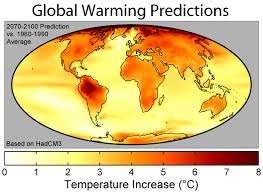
Even if we stopped emitting greenhouse gases (GHGs) today, the Earth would still warm by another degree Fahrenheit or so. But what we do from today forward makes a big difference. Depending on our choices, scientists predict that the Earth could eventually warm by as little as 2.5 degrees or as much as 10 degrees Fahrenheit.

A commonly cited goal is to stabilize GHG concentrations around 450-550 parts per million (ppm), or about twice pre-industrial levels. This is the point at which many believe the most damaging impacts of climate change can be avoided. Current concentrations are about 380 ppm, which means there isn't much time to lose. According to the IPCC, we'd have to reduce GHG emissions by 50% to 80% of what they're on track to be in the next century to reach this level.

Is this possible?

Many people and governments are already working hard to cut greenhouse gases, and everyone can help.

Researchers Stephen Pacala and Robert Socolow at Princeton University have suggested one approach that they call "stabilization wedges." This means reducing GHG emissions from a variety of sources with technologies available in the next few decades, rather than relying on an enormous change in a single area. They suggest 7 wedges that could each reduce emissions, and all of them together could hold emissions at approximately current levels for the next 50 years, putting us on a potential path to stabilize around 500 ppm.

There are many possible wedges, including improvements to energy efficiency and vehicle fuel economy (so less energy has to be produced), and increases in wind and solar power, hydrogen produced from renewable sources, biofuels (produced from crops), natural gas, and nuclear power. There is also the potential to capture the carbon dioxide emitted from fossil fuels and store it underground—a process called "carbon sequestration."

In addition to reducing the gases we emit to the atmosphere, we can also increase the amount of gases we take out of the atmosphere. Plants and trees absorb CO2 as they grow, "sequestering" carbon naturally. Increasing forestlands and making changes to the way we farm could increase the amount of carbon we're storing.

Some of these technologies have drawbacks, and different communities will make different decisions about how to power their lives, but the good news is that there are a variety of options to put us on a path toward a stable clim

Friday, February 26, 2010

ENERGY CRISIS

Causes

Market failure is possible when monopoly manipulation of markets occurs. A crisis can develop due to industrial actions like union organized strikes and government embargoes. The cause may be over-consumption, aging infrastructure, choke point disruption or bottlenecks at oil refineries and port facilities that restrict fuel supply. An emergency may emerge during unusually cold winters due to increased consumption of energy.

Pipeline failures and other accidents may cause minor interruptions to energy supplies. A crisis could possibly emerge after infrastructure damage from severe weather. Attacks by terrorists or militia on important infrastructure are a possible problem for energy consumers, with a successful strike on a Middle East facility potentially causing global shortages. Political events, for example, when governments change due to regime change, monarchy collapse, military occupation, and coup may disrupt oil and gas production and create shortages.

[edit] Historical crises

Gcprrets.gif
  • 1970s Energy Crisis - Cause: peaking of oil production in major industrial nations (Germany, U.S., Canada, etc.) and embargoes from other producers
  • 1973 oil crisis - Cause: an OPEC oil export embargo by many of the major Arab oil-producing states, in response to western support of Israel during the Yom Kippur War
  • 1979 oil crisis - Cause: the Iranian revolution
  • 1990 spike in the price of oil - Cause: the Gulf War
  • The 2000–2001 California electricity crisis - Cause: failed deregulation, and business corruption.
  • The UK fuel protest of 2000 - Cause: Raise in the price of crude oil combined with already relatively high taxation on road fuel in the UK.
  • North American natural gas crisis
  • Argentine energy crisis of 2004
  • North Korea has had energy shortages for many years.
  • Zimbabwe has experienced a shortage of energy supplies for many years due to financial mismanagement.
  • Political riots occurring during the 2007 Burmese anti-government protests were sparked by rising energy prices.

[edit] Emerging shortages

Kuwait's Al Burqan Oil Field, the world's second largest oil field, will be depleted within 40 years.[1]

Crises that exist as of 2008 include:

  • Oil price increases since 2003 - Caused by continued global increases in petroleum demand coupled with production stagnation, the falling value of the U.S. dollar, and a myriad of other secondary causes.
  • 2008 Central Asia energy crisis, caused by abnormally cold temperatures and low water levels in an area dependent on hydroelectric power. Despite having significant hydrocarbon reserves, in February 2008 the President of Pakistan announced plans to tackle energy shortages that were reaching crisis stage.[2] At the same time the South African President was appeasing fears of a prolonged electricity crisis in South Africa.[3]
  • South African electrical crisis. The South African crisis, which may last to 2012, lead to large price rises for platinum in February 2008[4] and reduced gold production.
  • China experienced severe energy shortages towards the end of 2005 and again in early 2008. During the latter crisis they suffered severe damage to power networks along with diesel and coal shortages.[5] Supplies of electricity in Guangdong province, the manufacturing hub of China, are predicted to fall short by an estimated 10 GW.[6]
  • It has been predicted that in the coming years after 2009 that the United Kingdom will suffer an energy crisis due to its commitments to reduce coal fired power stations, its politician's unwillingness to set up new nuclear power stations to replaces those that will be de-commissioned in a few years (even though they will not be running in time to stop a full blown crisis) and unreliable sources and sources that are running out of oil and gas. It is therefore predicted that the UK may have regular blackouts like South Africa.[7]

[edit] Social and economic effects

The macroeconomic implications of a supply shock-induced energy crisis are large, because energy is the resource used to exploit all other resources. When energy markets fail, an energy shortage develops. Electricity consumers may experience intentionally-engineered rolling blackouts which are released during periods of insufficient supply or unexpected power outages, regardless of the cause.

Industrialized nations are dependent on oil, and efforts to restrict the supply of oil would have an adverse effect on the economies of oil producers. For the consumer, the price of natural gas, gasoline (petrol) and diesel for cars and other vehicles rises. An early response from stakeholders is the call for reports, investigations and commissions into the price of fuels. There are also movements towards the development of more sustainable urban infrastructure.

In 2006, US survey respondents were willing to pay more for a plug-in hybrid car

In the market, new technology and energy efficiency measures become desirable for consumers seeking to decrease transport costs.[8] Examples include:

  • In 1980 Briggs & Stratton developed the first gasoline hybrid electric automobile; also are appearing plug-in hybrids.
  • the growth of advanced biofuels.
  • innovations like the Dahon, a folding bicycle
  • modernized and electrifying passenger transport
  • Railway electrification systems and new engines such as the Ganz-Mavag locomotive
  • variable compression ratio for vehicles

Other responses include the development of unconventional oil sources such as synthetic fuel from places like the Athabasca Oil Sands, more renewable energy commercialization and use of alternative propulsion. There may be a Relocation trend towards local foods and possibly microgeneration, solar thermal collectors and other green energy sources.

Tourism trends change and ownership of gas-guzzlers vary, both because of increases to fuel costs which are passed on to customers. Items which were not so popular gain favour, such as nuclear power plants and the blanket sleeper, a garment to keep children warm. Building construction techniques change to reduce heating costs, potentially through increased insulation.

[edit] Crisis management

An electricity shortage is felt most by those who depend on electricity for their heating, cooking and water supply. In these circumstances a sustained energy crisis may become a humanitarian crisis.

If an energy shortage is prolonged a crisis management phase is enforced by authorities. Energy audits may be conducted to monitor usage. Various curfews with the intention of increasing energy conservation may be initiated to reduce consumption. To conserve power during the Central Asia energy crisis, authorities in Tajikistan ordered bars and cafes to operate by candlelight.[9] Warnings issued that peak demand power supply might not be sustained.

In the worst kind of energy crisis energy rationing and fuel rationing may be incurred. Panic buying may beset outlets as awareness of shortages spread. Facilities close down to save on heating oil; and factories cut production and lay off workers. The risk of stagflation increases.

[edit] Mitigation of an energy crisis

Nuclear power in Germany

The Hirsch report made clear that an energy crisis is best averted by preparation. In 2008, solutions such as the Pickens Plan and the satirical in origin Paris Hilton energy plan suggest the growing public consciousness of the importance of mitigation.

Energy policy may be reformed leading to greater energy intensity, for example in Iran with the 2007 Gas Rationing Plan in Iran, Canada and the National Energy Program and in the USA with the Energy Independence and Security Act of 2007. In Europe the oil phase-out in Sweden is an initiative a government has taken to provide energy security. Another mitigation measure is the setup of a cache of secure fuel reserves like the United States Strategic Petroleum Reserve, in case of national emergency. Chinese energy policy includes specific targets within their 5 year plans.

World energy usage

Andrew McKillop has been a proponent of a contract and converge model or capping scheme, to mitigate both emissions of greenhouse gases and a peak oil crisis. The imposition of a carbon tax would have mitigating effects on an oil crisis.[citation needed] The Oil Depletion Protocol has been developed by Richard Heinberg to implement a powerdown during a peak oil crisis. While many sustainable development and energy policy organisations have advocated reforms to energy development from the 1970s, some cater to a specific crisis in energy supply including Energy-Questand the International Association for Energy Economics. The Oil Depletion Analysis Centre and the Association for the Study of Peak Oil and Gas examine the timing and likely effects of peak oil.

Ecologist William Rees believes that

To avoid a serious energy crisis in coming decades, citizens in the industrial countries should actually be urging their governments to come to international agreement on a persistent, orderly, predictable, and steepening series of oil and natural gas price hikes over the next two decades.

Due to a lack of political viability on the issue, government mandated fuel prices hikes are unlikely and the unresolved dilemma of fossil fuel dependence is becoming a wicked problem. A global soft energy path seems improbable, due to the rebound effect. Conclusions that the world is heading towards an unprecedented large and potentially devastating global energy crisis due to a decline in the availability of cheap oil lead to calls for a decreasing dependency on fossil fuel.

Other ideas have been proposed which concentrate on improved, energy-efficient design and development of urban infrastructure in developing nations.[10] Government funding for alternative energy is more likely to increase during an energy crisis, so too are incentives for oil exploration. For example funding for research into inertial confinement fusion technology increased during 1970's.

Energy economists theorize that declining energy availability will result in a higher price for energy and that this will attract investment to procure new sources of energy that may be substituted. However as Michael Lardelli and others have pointed out, this hypothesis does not include the concept of Energy Returned on Energy Invested, which is important for example, when considering biofuels as an alternative to conventional energy supplies. The theory also assumes that capital investment in the substitution sector will be available even if a financial downturn caused by higher energy prices happens.[11] Nor does the theory account for the fact that the most easily obtainable energy is extracted from reserves first because it provides the most profit leaving the smaller, harder to reach and more expensive to produce reserves.[12]

[edit] Future and alternative energy sources

In response to the petroleum crisis, the principles of green energy and sustainable living movements gain popularity. This has led to increasing interest in alternate power/fuel research such as fuel cell technology, liquid nitrogen economy, hydrogen fuel, methanol, biodiesel, Karrick process, solar energy, geothermal energy, tidal energy, wave power, and wind energy, and fusion power. To date, only hydroelectricity and nuclear power have been significant alternatives to fossil fuel.

Hydrogen gas is currently produced at a net energy loss from natural gas, which is also experiencing declining production in North America and elsewhere. When not produced from natural gas, hydrogen still needs another source of energy to create it, also at a loss during the process. This has led to hydrogen being regarded as a 'carrier' of energy, like electricity, rather than a 'source'. The unproven dehydrogenating process has also been suggested for the use water as an energy source.

Efficiency mechanisms such as Negawatt power can encourage significantly more effective use of current generating capacity. It is a term used to describe the trading of increased efficiency, using consumption efficiency to increase available market supply rather than by increasing plant generation capacity. As such, it is a demand-side as opposed to a supply-side measure.

[edit] Predictions

Although technology has made oil extraction more efficient, the world is having to struggle to provide oil by using increasingly costly and less productive methods such as deep sea drilling, and developing environmentally sensitive areas such as the Arctic National Wildlife Refuge.

The world's population continues to grow at a quarter of a million people per day, increasing the consumption of energy. Although far less from people in developing countries, especially USA, the per capita energy consumption of China, India and other developing nations continues to increase as the people living in these countries adopt more energy intensive lifestyles. At present a small part of the world's population consumes a large part of its resources, with the United States and its population of 300 million people consuming far more oil than China with its population of 1.3 billion people.

William Catton has emphasised the link between population size and energy supply, concluding that

The faster the present generation draws down the fossil energy legacy upon which persistently exuberant lifestyles now depend, the less opportunity posterity will have to live in anything like the same way or the same numbers. Yet most contemporary political proposals for solving problems of economic stagnation or inequity amount to plans for speeding up the rate of drawdown of non-renewable resources.

David Pimentel professor of ecology and agriculture at Cornell University, has called for massive reduction in world populations in order to avoid a permanent global energy crisis. The implication is that cheap oil has created a human overshoot beyond Earth's carrying capacity which inevitably lead to an energy crisis. David Price postulates that population growth occurs when a higher quality form of energy is commercialised.[13]

For nearly 60 years the US dependence on imported oil has grown significantly.

Matthew Simmons and Julian Darley amongst others, have examined the economic effects of an energy crisis. Historian, and sociologist Franz Schurmann links an energy crisis with a deflating American dollar. He has stated that

If a dollar free-fall should take place, Americans will confront an energy crisis that will make the October 1973 oil shortage seem a mild nuisance.

According to Christopher Falvin, geopolitical factors has resulted in current energy system, based on fossil fuels, to be a risk management issue that undermines global security.[citation needed] Considering the significant source of greenhouse gas emissions accumulating in the atmosphere, fossil fuel energy is being viewed as increasingly socially irresponsible. Joseph Tainter is an expert on societal collapse and energy supply who draws attention to the complexity of modern society and our ability to problem solve the wider issue of environmental degradation.[14]

National population suffering from undernourishment as percentage.

[edit] Agriculture

According to Kenneth S. Deffeyes agricultural production is heavily dependent on hydrocarbons for energy, in the form of petroleum to power machinery and transport goods to market. Another important input is fertilizer usage that is highly dependent on natural gas for its production and sometimes for fueled irrigation. Between the late 1940s and early 1980s, as the Green Revolution transformed agriculture around the globe, world grain production increased by 250%. The energy for the Green Revolution was provided almost always by fossil fuels.[citation needed] The 20th century population explosion is strongly correlated with the discovery and extraction of hydrocarbons.

The decision to develop a biofuel industry through subsidies and tariffs in the USA has increased food costs globally. Lester R. Brown states [15] that by converting grains into fuel for cars

..the world is facing the most severe food price inflation in history as grain and soyabean prices climb to all-time highs,
World power usage, 1965–2005

[edit] Catastrophe

Some experts including Howard Odum and David Holmgren have used the term energy descent to describe a post-peak oil period of transition. Ron Swenson has described a looming peak oil crisis as a calamity unparalleled in human history.[citation needed] The peaking of world hydrocarbon production, known as peak oil may test Malthus critics. Michael C. Ruppert has discussed energy crises in relation to the petrodollar, oil imperialism and police states.

[edit] Cultural references

Fictional scenarios have been explored in;

  • Frontlines: Fuel of War, a first-person shooter game that depicts a global energy crisis in 2024 leading to war between Western Coalition (EU and USA) against Red Star Alliance (Russia and China) over the last remaining natural resources
  • Ice, online comic
  • Mad Max, depicts an energy starved post-apocalypse world.
  • Oil Storm, a 2005 television docudrama portraying a future oil-shortage crisis in the United States
  • Soylent Green, a film about a dystopian future in which overpopulation leads to depleted resources
  • The Man Who Broke Britain, a BBC docudrama
  • The Running Man, a fictional film depicts the effects of a global economic collapse

Thursday, February 25, 2010

MINERAL RESOURCES

Mineral resource classification is the classification of mineral deposits based on their economic value.

Mineral deposits can be classified as:

  • Mineral occurrences or prospects of geological interest but not necessarily of economic interest
  • Mineral resources that are potentially valuable, and for which reasonable prospects exist for eventual economic extraction.
  • Mineral reserves or Ore reserves that are valuable and economically and technically feasible to extract

In common mining terminology, an "ore deposit" by definition must have an 'ore reserve', and may or may not have additional 'resources'.

Classification, because it is an economic function, is governed by statutes, regulations and industry best practice norms. There are several classification schemes worldwide, however the Canadian CIM classification (see NI 43-101), the Australasian Joint Ore Reserves Committee Code (JORC Code), and the South African Code for the Reporting of Mineral Resources and Mineral Reserves (SAMREC)[1] are the general standards.

Contents

[hide]
  • 1 Mineral occurrences, prospects
  • 2 Mineral resources
  • 3 Mineral reserves
  • 4 Further information
  • 5 See also
  • 6 References

[edit] Mineral occurrences, prospects

These classifications of mineral occurrences are generally the least important and least economic. They include all known occurrences of minerals of economic interest, including obviously uneconomic outcrops and manifestations. However, these are often mentioned in a company prospectus because of "proximity"; a concept that something valuable may be found near these occurrences because it has been in the past due to a similar geological environment. Often, such occurrences of mineralisation are the peripheral manifestations of nearby ore deposits. "Ore deposit" applies specifically to economic mineral occurrences that could be mined at a profit after consideration of all factors impacting a mining operation. Note that this distinction between amounts of raw material available as either a resource or reserve also applies to other materials considered to be minerals. This can include natural gas (legally defined as a mineral in some states of the United States) and hydrocarbons.

[edit] Mineral resources

Mineral resources are those economic mineral concentrations that have undergone enough scrutiny to quantify their contained metal to a certain degree. None of these resources are ore, because the economics of the mineral deposit may not have been fully evaluated.

Indicated resources are simply economic mineral occurrences that have been sampled (from locations such as outcrops, trenches, pits and drillholes) to a point where an estimate has been made, at a reasonable level of confidence, of their contained metal, grade, tonnage, shape, densities, physical characteristics[2].

Measured resources are indicated resources that have undergone enough further sampling that a 'competent person' (defined by the norms of the relevant mining code; usually a geologist) has declared them to be an acceptable estimate, at a high degree of confidence, of the grade, tonnage, shape, densities, physical characteristics and mineral content of the mineral occurrence.

Resources may also make up portions of a mineral deposit classified as a mineral reserve, but:

  • Have not been sufficiently drilled out to qualify for Reserve status; or
  • Have yet to meet all criteria for Reserve status [2]

[edit] Mineral reserves

Mineral reserves are resources known to be economically feasible for extraction. Reserves are either Probable Reserves or Proven Reserves. Generally the conversion of resources into reserves requires the application of various modifying factors, including:

  • mining and geological factors, such as knowledge of the geology of the deposit sufficient that it is predictable and verifiable; extraction and mine plans based on ore models; quantification of geotechnical risk—basically, managing the geological faults, joints, and ground fractures so the mine does not collapse; and consideration of technical risk—essentially, statistical and variography to ensure the ore is sampled properly:
  • metallurgical factors, including scrutiny of assay data to ensure accuracy of the information supplied by the laboratory—required because ore reserves are bankable. Essentially, once a deposit is elevated to reserve status, it is an economic entity and an asset upon which loans and equity can be drawn—generally to pay for its extraction at (hopefully) a profit;
  • economic factors;
  • environmental factors;
  • marketing factors;
  • legal factors;
  • governmental factors;and
  • social factors [3].

[edit] Further information

  • JORC Code
  • University of Western Australia Mining Law Centre
  • U.S. Geological Survey Circular 831, Principles of a Resource/Reserve Classification for Minerals
  • Canadian Institute of Mining, Metallurgy and Petroleum - CIM Definition Standards - On Mineral Resources and Mineral Reserves (PDF Format)
  • The Canadian Council of Professional Geoscientists CCPG
  • NI 43-101 Guidelines
  • The South African SAMVAL and SAMREC Codes